How to Choose the Right Webbing Strap for Your Needs?
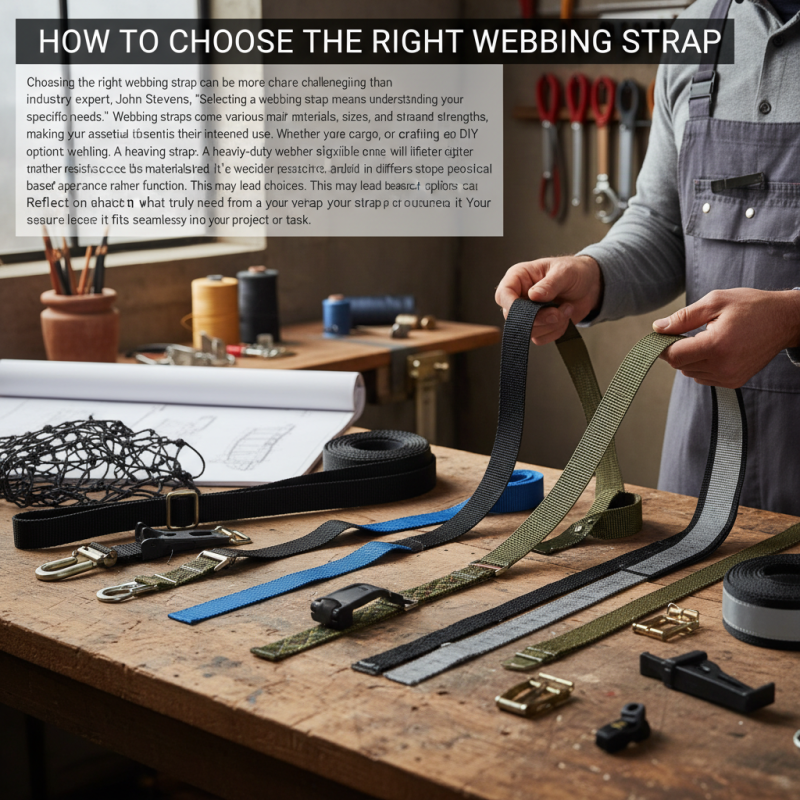
Choosing the right webbing strap can be more challenging than it seems. According to industry expert John Stevens, "Selecting a webbing strap means understanding your specific needs." Webbing straps come in various materials, sizes, and strengths, making it essential to assess their intended use.
Whether you're securing cargo, creating outdoor gear, or crafting DIY projects, the options can be overwhelming. A heavy-duty webbing strap will differ significantly from a lighter, more flexible one. It's crucial to consider the weight capacity, weather resistance, and durability of the materials used in different webbing straps.
Often, people choose based on appearance rather than function. This may lead to unsuitable choices. Taking the time to research options can prevent costly mistakes. Reflect on what you truly need from a webbing strap to ensure it fits seamlessly into your project or task. Your choice impacts both safety and efficiency.
Understanding Different Types of Webbing Straps and Their Uses
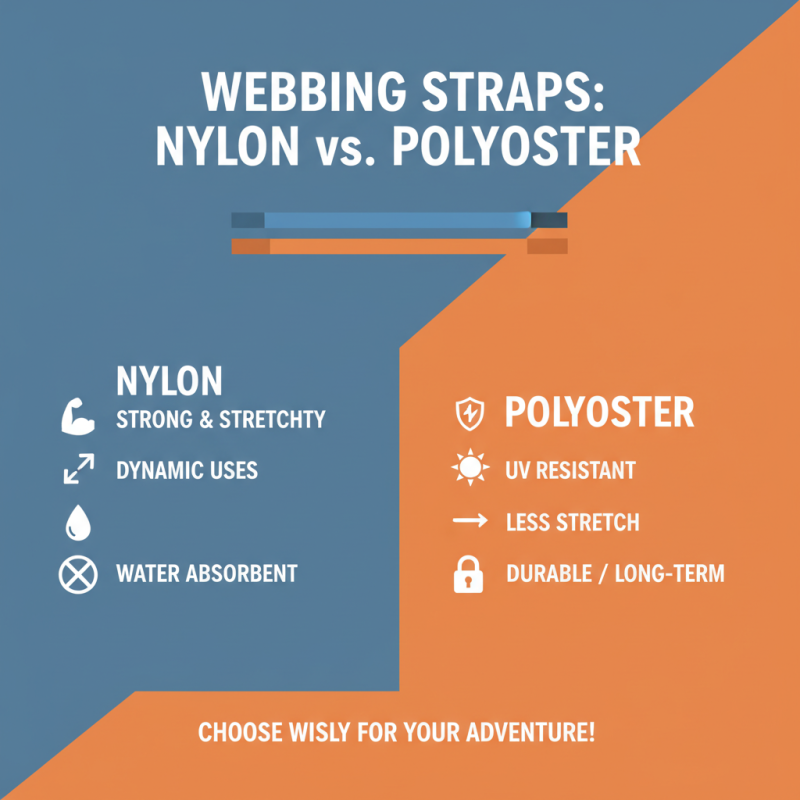
When selecting a webbing strap, it's crucial to understand the variety of types available. Nylon and polyester are popular fibers. Nylon is strong and stretchy, great for dynamic uses. However, it can absorb water, which might not be ideal for outdoor activities. Polyester, on the other hand, is more UV resistant and less prone to stretching. If you need a dependable option, polyester could be a better fit for long-term use.
Webbing straps come in various widths and thicknesses. A wider strap typically distributes weight better. For heavy loads, you might consider a strap that is at least 1 inch wide. Conversely, narrow straps can be beneficial for lighter tasks, like securing smaller items. Don't overlook the stitching and reinforcement; poor stitching can lead to failures at crucial moments. Always choose carefully.
When evaluating your needs, reflect on the specific application. Will it be for securing cargo or outdoor activities? Think about load capacities and environmental factors. Sometimes, the best choice may not be the most expensive one. In fact, an economical option often suffices if matched with your intended use. Take the time to assess each strap's qualities and make an informed decision.
Evaluating Load Capacity: How Much Weight Can Your Webbing Handle?
When selecting a webbing strap, load capacity is crucial. Understanding how much weight your strap can handle is essential in any application. Most webbing straps feature a load limit defined by their material and weave. For instance, polyester webbing often boasts a tensile strength ranging from 1,500 to 5,000 pounds, depending on its width and fabric density. This broad range allows for versatility in various uses, from camping gear to heavy-duty towing.
However, one must consider factors that can diminish this capacity. Environmental conditions, such as exposure to UV light and moisture, may weaken the webbing over time. A recent industry report indicated that webbing can lose up to 20% of its strength when regularly subjected to harsh sunlight. This insight underscores the importance of regular inspections and replacements. Are you assessing your strap under real-world conditions?
Beyond just strength, it is crucial to match webbing types with their intended use. Some may confuse breaking strength with working load limits. The working load limit is usually only 10% to 20% of the breaking strength. Misunderestimating this could lead to potential failures and accidents. Understanding your needs and evaluating load capacity thoroughly ensures safety and effectiveness.
How to Choose the Right Webbing Strap for Your Needs? - Evaluating Load Capacity: How Much Weight Can Your Webbing Handle?
| Webbing Type |
Load Capacity (lbs) |
Width (inches) |
Material |
Common Uses |
| Nylon Webbing |
1000 |
1 |
Nylon |
Camping, Harnesses |
| Polyester Webbing |
1500 |
1.5 |
Polyester |
Towing, Straps |
| Cotton Webbing |
500 |
1 |
Cotton |
Fashion Accessories, Belts |
| Heavy-Duty Polypropylene Webbing |
2000 |
2 |
Polypropylene |
Industrial Applications, Cargo |
| Reflective Webbing |
800 |
1.25 |
Nylon/Polyester Blend |
Safety Gear, Outdoor Equipment |
Choosing the Right Material: Nylon, Polyester, or Other Options?
Choosing the right material for webbing straps can seem daunting. There are primarily two common materials: nylon and polyester. Both come with distinct characteristics that suit different applications.
Nylon is strong and elastic. It has excellent abrasion resistance. However, it absorbs water. It can lose strength when wet. Think about your usage. If you need waterproofing, nylon may not be the best choice.
Polyester is less elastic and more resistant to UV rays. It doesn’t stretch much under load. This can be beneficial in specific applications. Yet, it may not hold up as well under heavy wear compared to nylon.
Tips: Always consider your environment. If your strap will be exposed to sunlight, polyester might last longer. If you need flexibility, nylon can work well. Test samples before purchasing. This can save you from future issues.
Material Comparison for Webbing Straps
Measuring Width and Length: Finding the Perfect Fit for Your Needs
Choosing the right webbing strap begins with accurate measurements. Width and length are crucial for ensuring the strap fits your specific needs. Start by assessing the intended use. For example, a wider strap might be necessary for heavier loads. It distributes weight better, reducing strain. A strap that is too narrow cannot handle the same weight safely.
When measuring length, consider the application. Do you need extra length for adjusting or securing? Short straps may not work well if your needs change. Ideally, the strap should provide some flexibility in its use. For tasks like securing a load, always measure the item you will secure. Sometimes people forget to account for knots or attachment points. This oversight can lead to ineffective use.
Consider materials as well. Some materials stretch more than others. This can affect performance in practical situations. If you're unsure, experiment with different sizes. Testing can reveal what you truly need. Don't rush the decision. Taking the time to find the right dimensions can save you from frustration later.
Safety Standards and Certifications: Ensuring Quality and Reliability
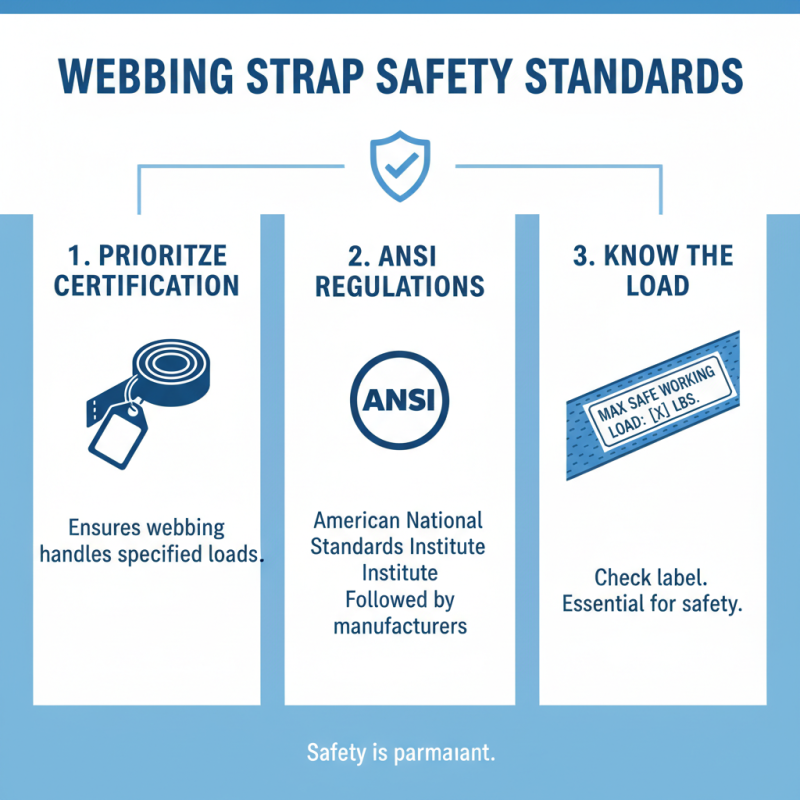
When choosing a webbing strap, safety standards and certifications should be a priority. These standards ensure that the webbing can handle specified loads. For instance, the American National Standards Institute (ANSI) sets regulations that many manufacturers follow. A certified strap typically features a label indicating its maximum safe working load. Knowing this load is essential for safety.
Many industries use webbing straps for lifting, securing, and towing. According to the Occupational Safety and Health Administration (OSHA), improperly rated straps can lead to accidents. In fact, about 15% of workplace injuries are related to lifting. Ensuring that a webbing strap meets quality standards reduces these risks significantly.
The materials used in webbing straps also contribute to their reliability. Polyester and nylon are common choices, each offering different strengths. While polyester resists UV damage, nylon has greater elasticity. It’s crucial to assess the environment where the strap will be used. Even if a strap claims a high load capacity, environmental factors can impact performance. Therefore, testing and verifying the strap under expected conditions is vital. Only then can you confidently choose a webbing strap that guarantees safety and reliability.