How to Choose the Right Webbing Sling for Your Needs?
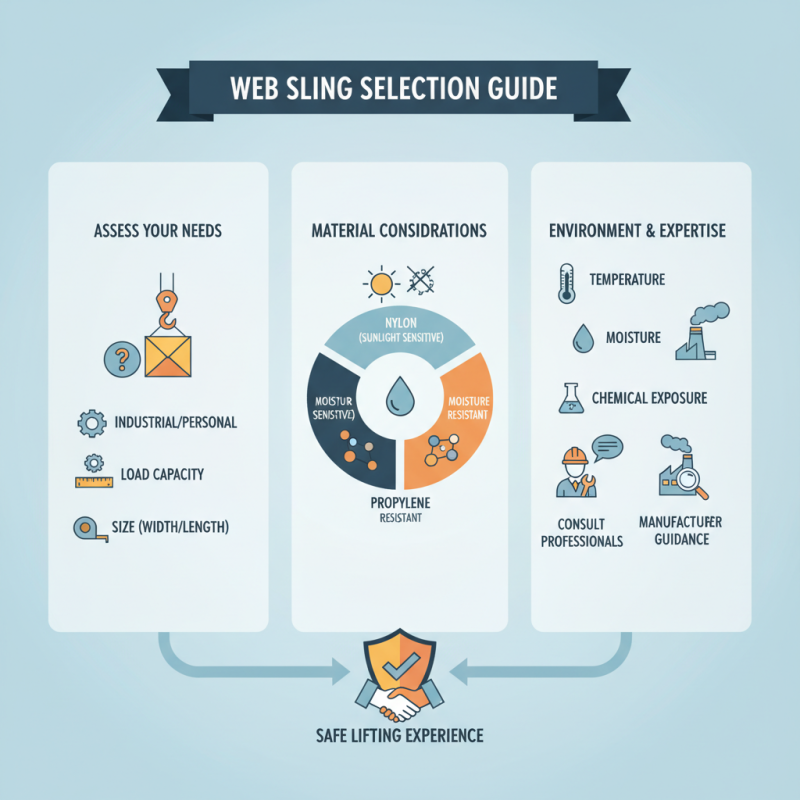
Choosing the right webbing sling is essential for safe and effective lifting. With various types available, it can be overwhelming to make the best choice. Different slings serve different needs, whether for industrial use or personal projects. Understanding your specific uses will guide your decision.
Webbing slings come in various widths, lengths, and materials. Each type has unique load capacities and applications. For example, nylon slings are flexible and resistant to abrasion. However, they can be weakened by exposure to sunlight. This means careful consideration is necessary when selecting your webbing sling.
Additionally, consider your working environment. Factors like temperature, moisture, and potential chemical exposure can affect a sling's performance. Make a note of these conditions before your purchase. Consulting manufacturers or trained professionals can provide valuable insights. A wrongly chosen webbing sling can lead to accidents or equipment failure. Taking the time to reflect on your needs will lead to a safer lifting experience.
Understanding Webbing Sling Types and Their Applications
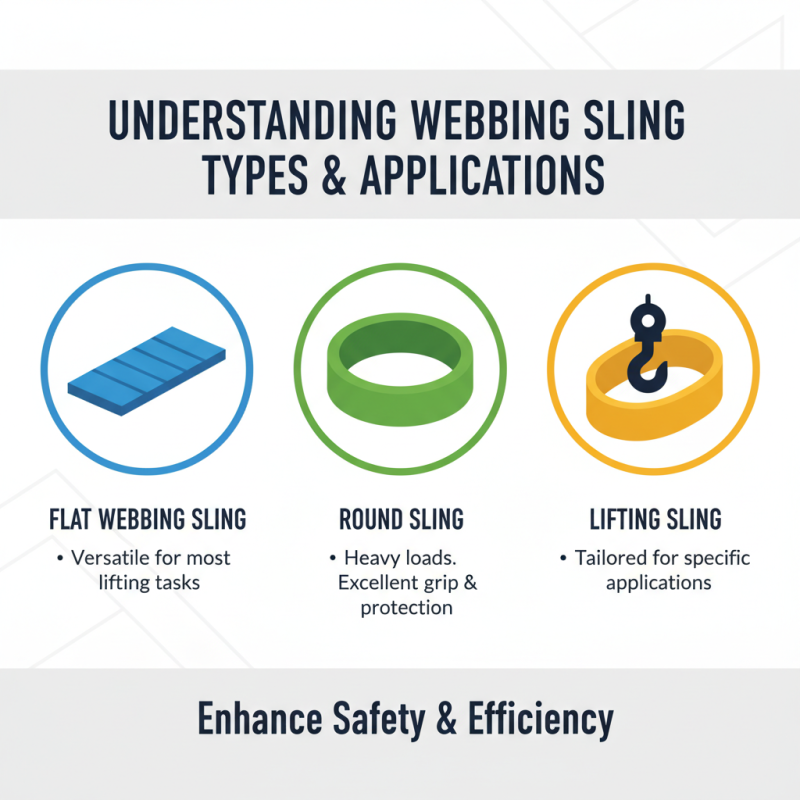
When selecting a webbing sling, understanding the various types is essential. Webbing slings come in different styles: flat, round, and lifting. Flat webbing slings are versatile and ideal for most lifting tasks. Round slings are designed for heavy loads, providing excellent grip and protection. Each type is tailored for specific applications, enhancing safety and efficiency.
Flat slings are often favored for their ease of use. They can wrap around loads without causing damage. However, they may not perform well with sharp edges. Round slings, on the other hand, can better handle challenging shapes. Still, their flexibility might lead to improper loading if not managed well. Each option has its strengths and weaknesses, urging users to consider their specific needs carefully.
It's crucial to evaluate load requirements too. The weight and shape of your load will influence the sling type you choose. Always consult user guides and safety standards. Mistakes can lead to accidents or equipment failure. Understanding the specifics of each type ensures you're not grappling with the consequences of incorrect choices.
Key Factors in Selecting Webbing Slings for Specific Loads
Choosing the right webbing sling is crucial for safe lifting. When selecting a webbing sling, consider several key factors. The load type is significant. Be aware of how weight distribution affects sling performance. For example, flat slings are ideal for even loads. In contrast, round slings excel in situations with awkward shapes.
Next, inspect the sling’s capacity. Each sling comes with a rated working load limit (WLL). Exceeding this limit can lead to failures. It’s wise to select a sling with a higher capacity than needed. This additional margin enhances safety. Additionally, consider the sling's material. Polyester is commonly used for its durability and resistance to UV and chemicals. However, it might not hold up well in extreme heat.
Also, think about the sling's length. A longer sling can offer more flexibility during lifting tasks. However, it may also introduce more slack, which can be an issue in some scenarios. Always evaluate if the length aligns with the intended use. Selecting the wrong length can compromise safety and efficiency. Remember, a well-chosen sling can make all the difference in lifting tasks.
Evaluating Load Capacity: ANSI vs. ASME Standards
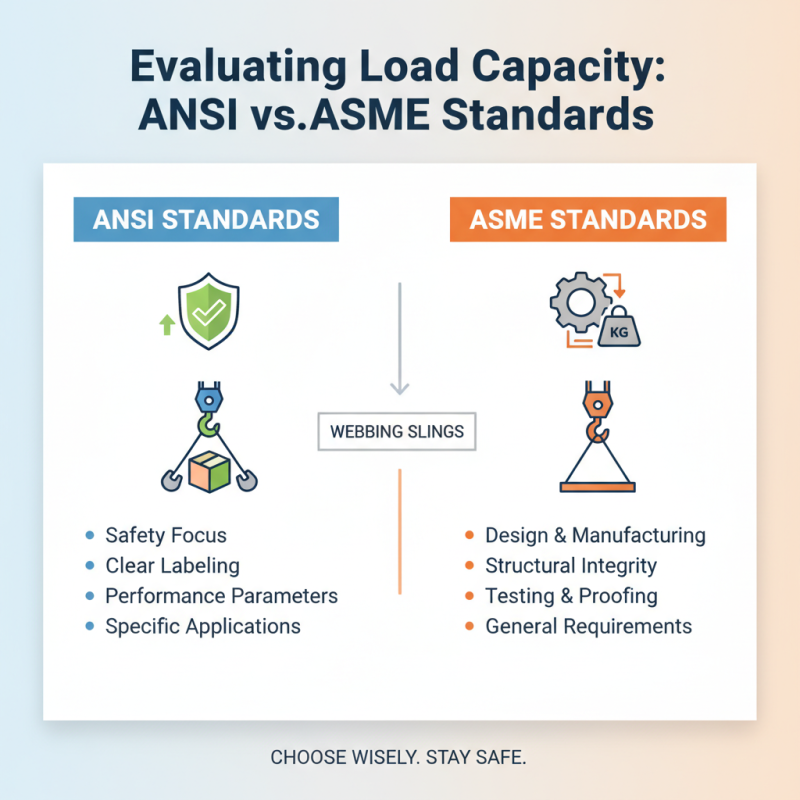
When choosing a webbing sling, understanding load capacity is crucial. Two primary standards govern this: ANSI and ASME. ANSI, the American National Standards Institute, emphasizes safety and encourages manufacturers to provide clear labeling. It focuses on performance within defined parameters and specific applications. This can guide users in selecting the right sling for their load types and environments.
On the other hand, ASME, the American Society of Mechanical Engineers, has more rigorous testing requirements. It provides comprehensive guidelines for design, construction, and maintenance. These criteria ensure that slings not only meet load demands but also maintain structural integrity over time. Users must consider these factors seriously. Misunderstanding load ratings can lead to accidents. Always check for compliance. A sling that meets both ANSI and ASME standards offers greater assurance.
However, it's essential to approach these standards critically. Sometimes, manufacturers may market products that appear compliant yet fall short in real-world applications. Users should not rely solely on labels. Regular inspection and maintenance of slings are paramount. Accumulated wear can compromise safety, even on compliant slings. Stay vigilant. Make informed choices and prioritize safety.
Material Considerations: Nylon, Polyester, and Their Uses
Choosing the right webbing sling involves understanding materials.
Nylon and polyester are two popular options,
each with specific features. Nylon slings are known for their elasticity.
This elasticity allows them to absorb shock well, making them ideal for dynamic loads.
They're also resistant to abrasion and have a good strength-to-weight ratio.
However, nylon loses strength when exposed to sunlight for long periods.
This can be a significant drawback in outdoor applications.
On the other hand, polyester webbing slings offer excellent UV resistance.
They maintain their strength even under prolonged exposure to sunlight, making them suitable for outdoor use.
Polyester also has lower stretch compared to nylon. This means they provide more stability when lifting heavy loads.
However, they are less abrasion-resistant than nylon, which is worth considering in environments with rough surfaces.
Evaluating these material properties is crucial for making an informed choice.
Testing slings in real-life scenarios can help buyers understand their performance and limitations better.
Always consider specific applications and potential risks.
Maintenance Tips for Ensuring Longevity of Webbing Slings
Maintaining webbing slings is essential for safety and performance. Regular inspections can help identify signs of wear and tear. Look for fraying, cuts, or discoloration. These issues can compromise the sling's strength. If you notice any damage, it’s crucial to replace the sling immediately.
Storing webbing slings properly also contributes to their longevity. Keep them in a cool, dry place away from direct sunlight. Excessive heat and moisture can weaken the fibers over time. Avoid exposing the slings to harsh chemicals or abrasive surfaces, as they can lead to premature degradation.
One common mistake is neglecting regular cleaning. Dirt and debris can accumulate, affecting the sling's integrity. A gentle wash with mild soap and water is often sufficient. Rinse thoroughly and let the sling air dry completely before storage. This simple routine can extend the life of your webbing slings significantly. Regular care is a small investment for safety.
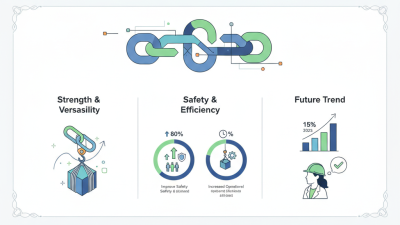
Webbing Sling Types Usage Comparison